Wet Slab Under the Carpet: Courtyard Water Ingress in Glebe, NSW
Ground floor apartments that open onto a courtyard can have a hidden problem: water finding its way in at floor level. The carpet may look fine, but the slab underneath can tell a very different story.
At a ground floor apartment in Glebe, NSW, High Demand Flood & Water Damage Restoration Sydney was engaged by the property manager after the tenants reported mould in the bedrooms. Our moisture testing pointed to a possible water entry point.
Signs of Moisture in the Bedrooms
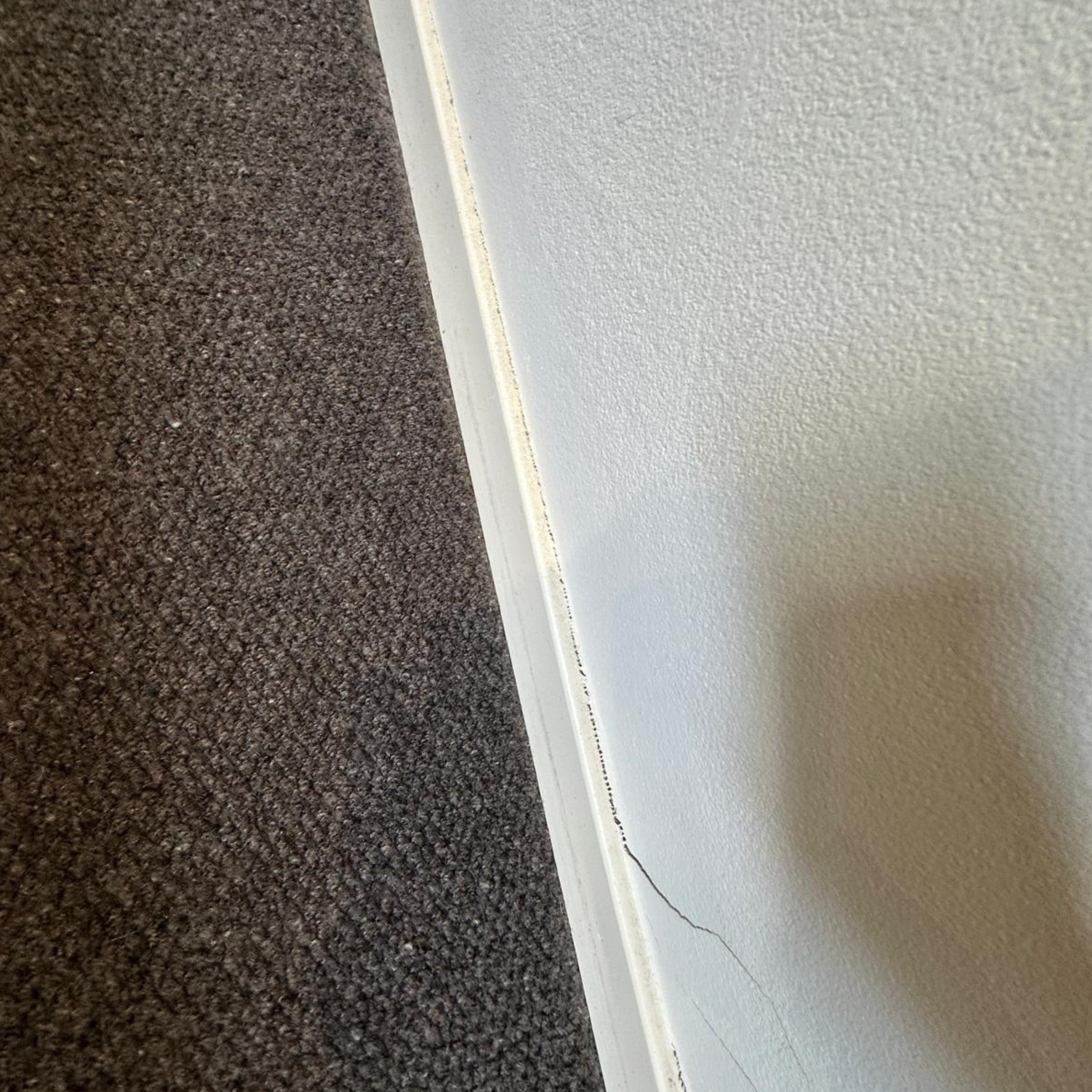
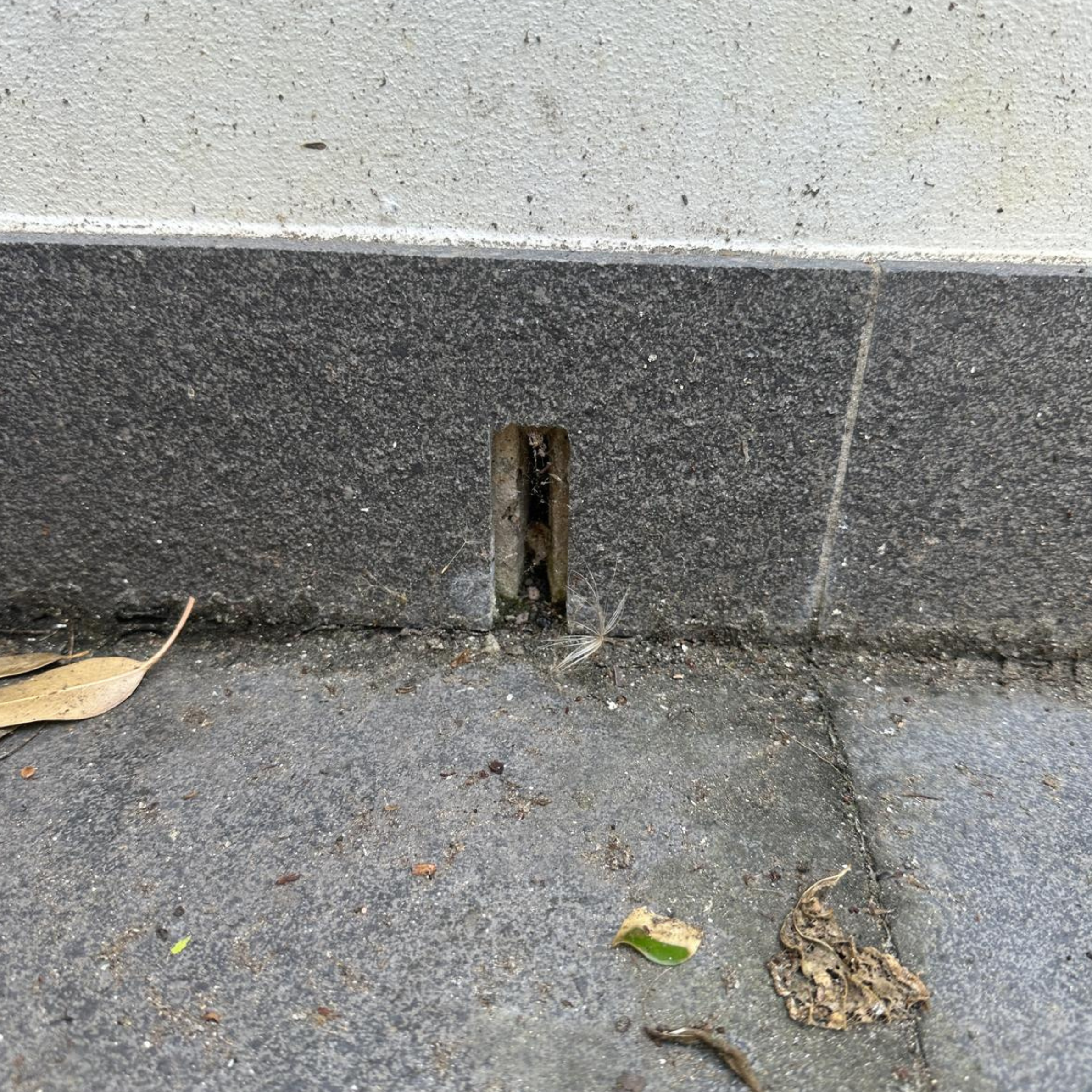
Before any testing, there were warning signs: cracking and bubbling of the skirtings, rust on the ensuite door frame, and mould on the walls, curtains and doors. In the courtyard, weep holes were below ground level.
Moisture Testing Results
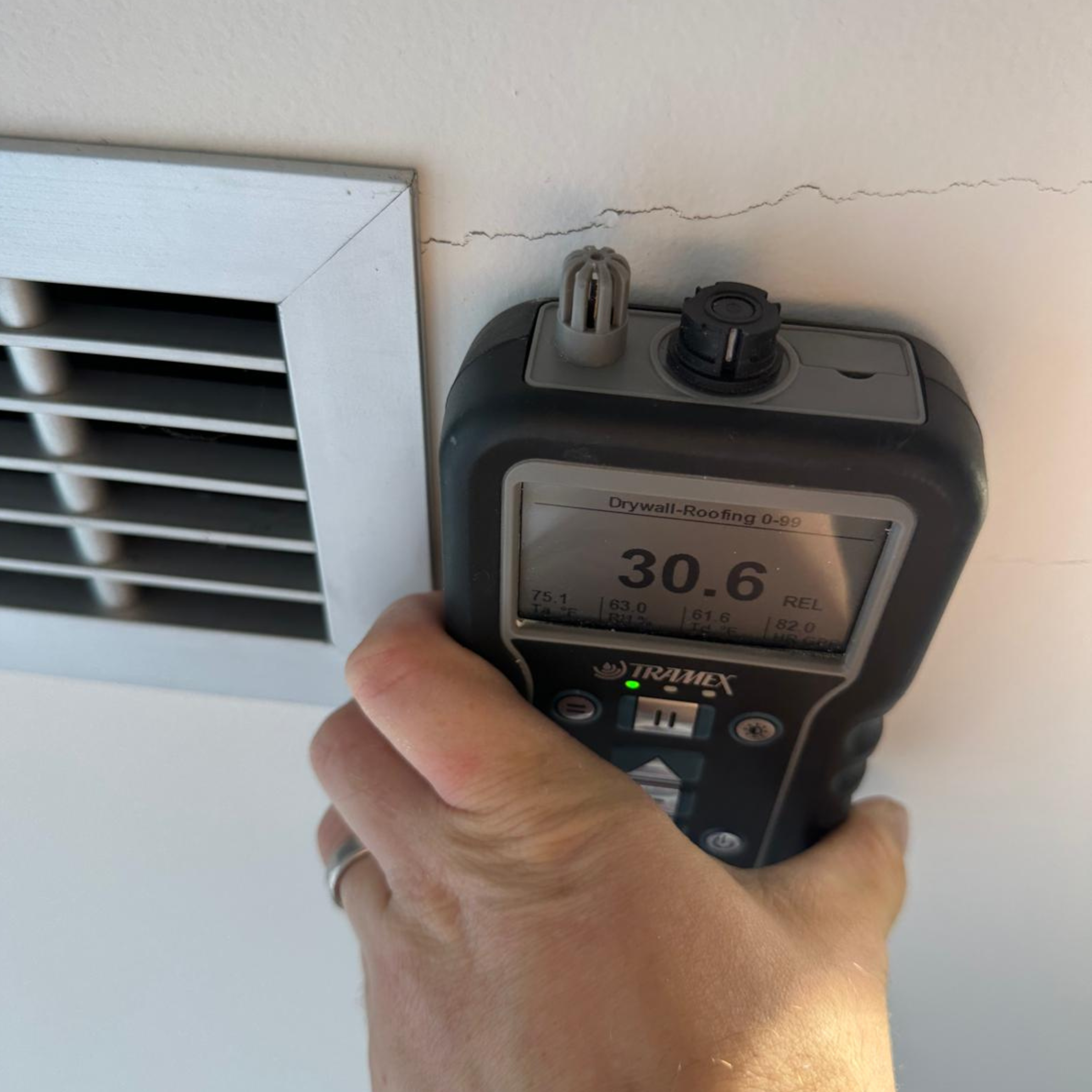
Moisture mapping was carried out in bedroom two with a non-invasive moisture meter:
Back wall skirting: 18.2% to 30.0%, against a dry standard of 11.0%
Wall next to the aircon vent: 30.6%, against a gyprock dry standard of 15.0%
Internal relative humidity: 63.6%, compared with 57.4% outside
An infrared scan showed a slight anomaly next to the aircon unit, but moisture testing at that spot was within an acceptable range.
What Was Under the Carpet
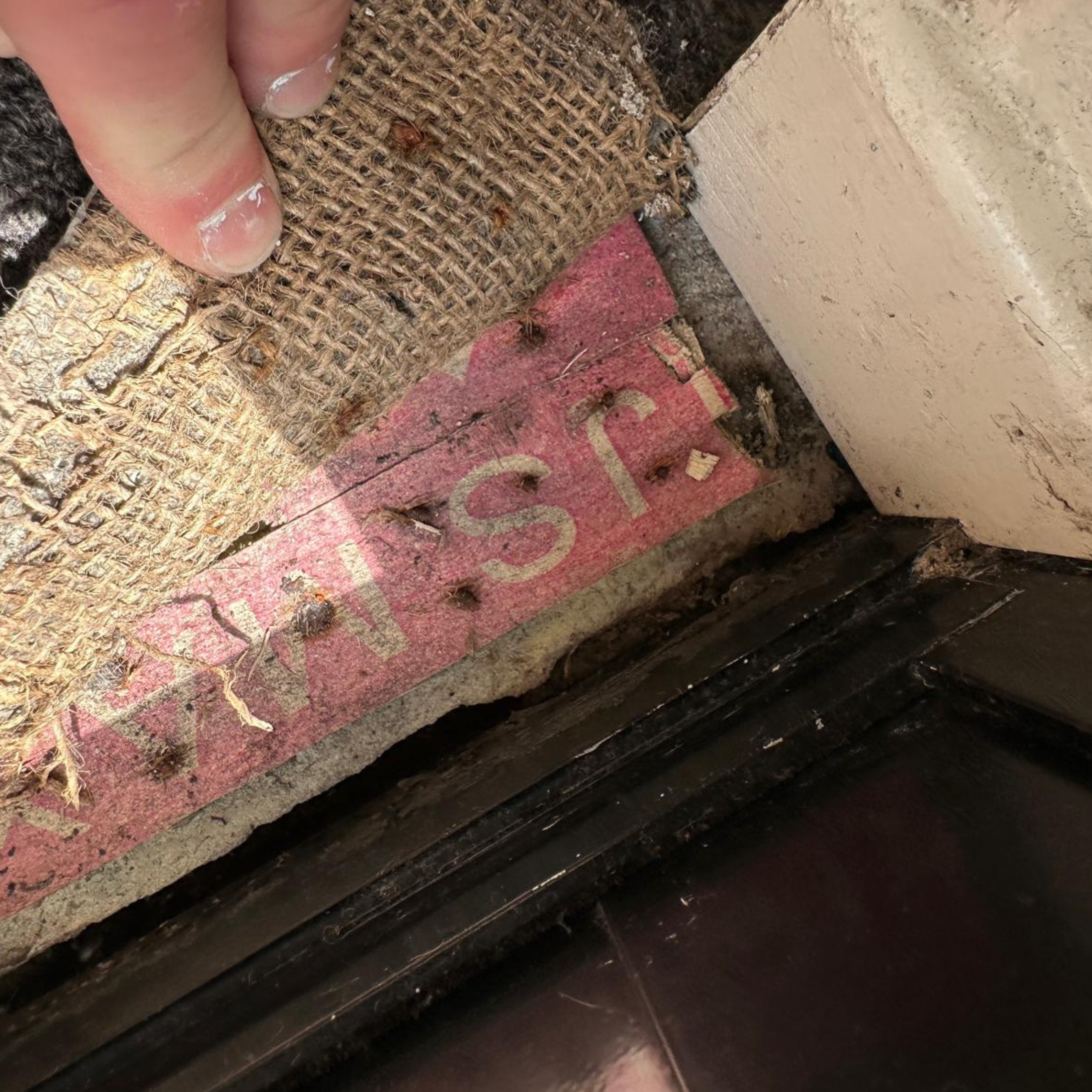
The biggest finding was beneath the carpet at the sliding door to the courtyard. The carpet gripper was heavily deteriorated and mouldy, the underlay was slightly wet to the touch, and the concrete slab read 42.1%, 70.9% and 80.0%.
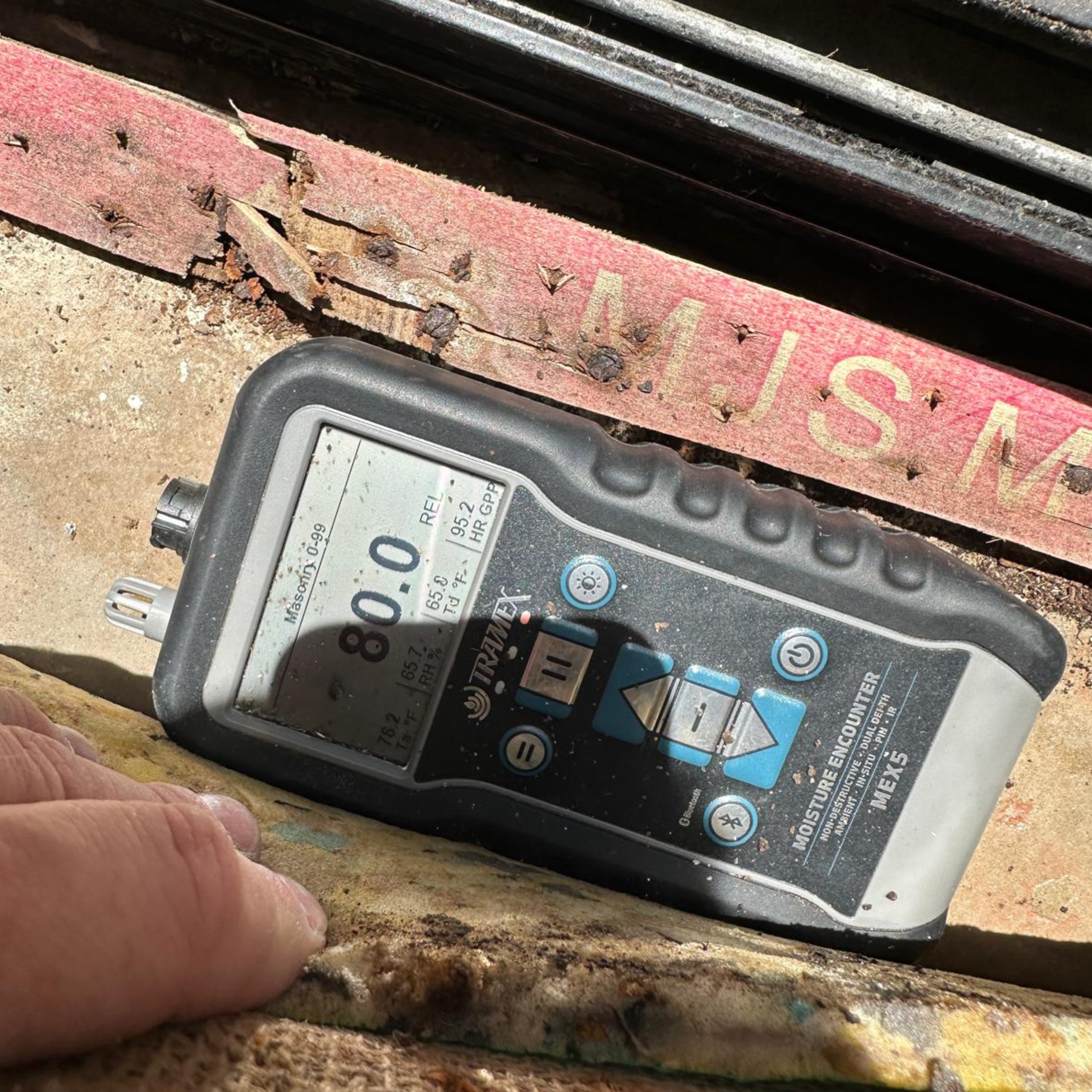
In bedroom one, the slab near the window also had elevated readings. They were lower than in bedroom two but still elevated, and the area is close to the weep holes below ground level in the courtyard.
What Needs to Happen Next
These findings raise concern that water may be getting in from the courtyard. Our recommendations:
Have a suitably qualified trade investigate and fix the potential water entry at the sliding door.
Investigate and fix the source of the elevated slab moisture near the bedroom one window.
Remove the mould affected carpet gripper and wet underlay.
Dry the slab with dehumidifiers and air movers until readings reach acceptable dry standards.
Carry out mould remediation once the moisture source is fixed.
Why the Water Source Comes First
Cleaning mould without fixing the moisture source usually means the mould comes back. Finding where the water is coming in, and drying the slab properly, gives any remediation the best chance of lasting.
Dealing with water damage or mould in Glebe or the Inner West? Our IICRC certified team is available 24/7. Call (02) 9090 4625 or download our free mould guide.