Hidden Water Damage and Mould After a Leak in Caringbah South, NSW
A home in Caringbah South, NSW required water damage restoration after damp carpet was discovered near the upstairs ensuite. Further inspection found that moisture had travelled beyond the original area, affecting several rooms and building materials across the property.
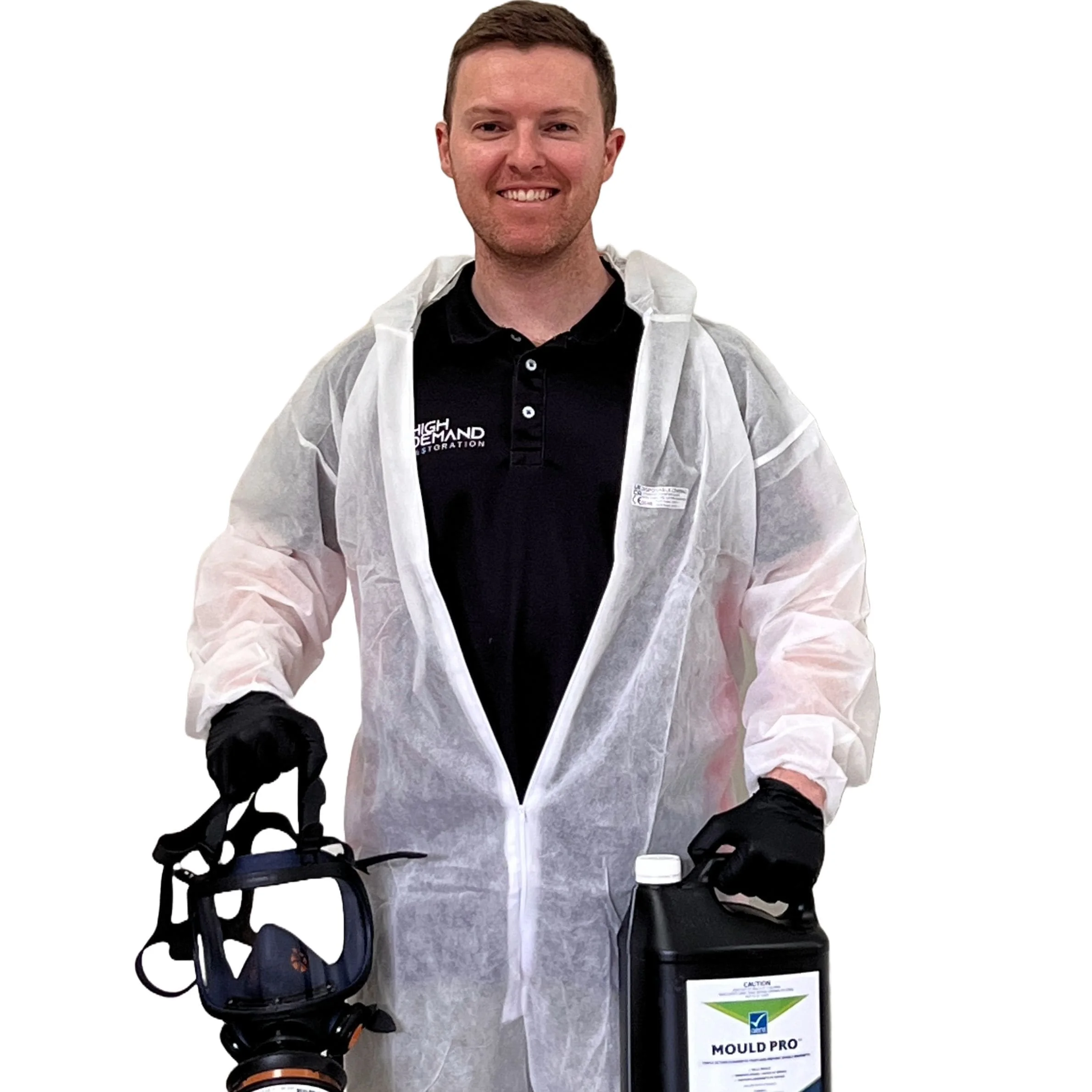
Our team carried out moisture testing, removed affected carpet where required, treated areas of mould contamination, and installed drying equipment to help stabilise the property.
Water Damage Across Multiple Rooms
Moisture testing confirmed that the water damage was not limited to one area of the home.
In the upstairs master bedroom, moisture was detected within the carpet, lower wall sections, skirting boards and built in wardrobe cabinetry. The middle bedroom also showed moisture affecting the walls, ceilings, carpets and skirting boards.
On the lower level, moisture was identified around the walls, ceilings, carpets and skirting boards. Existing inspection openings also allowed our team to assess some of the affected areas more closely.
Inspection and Findings
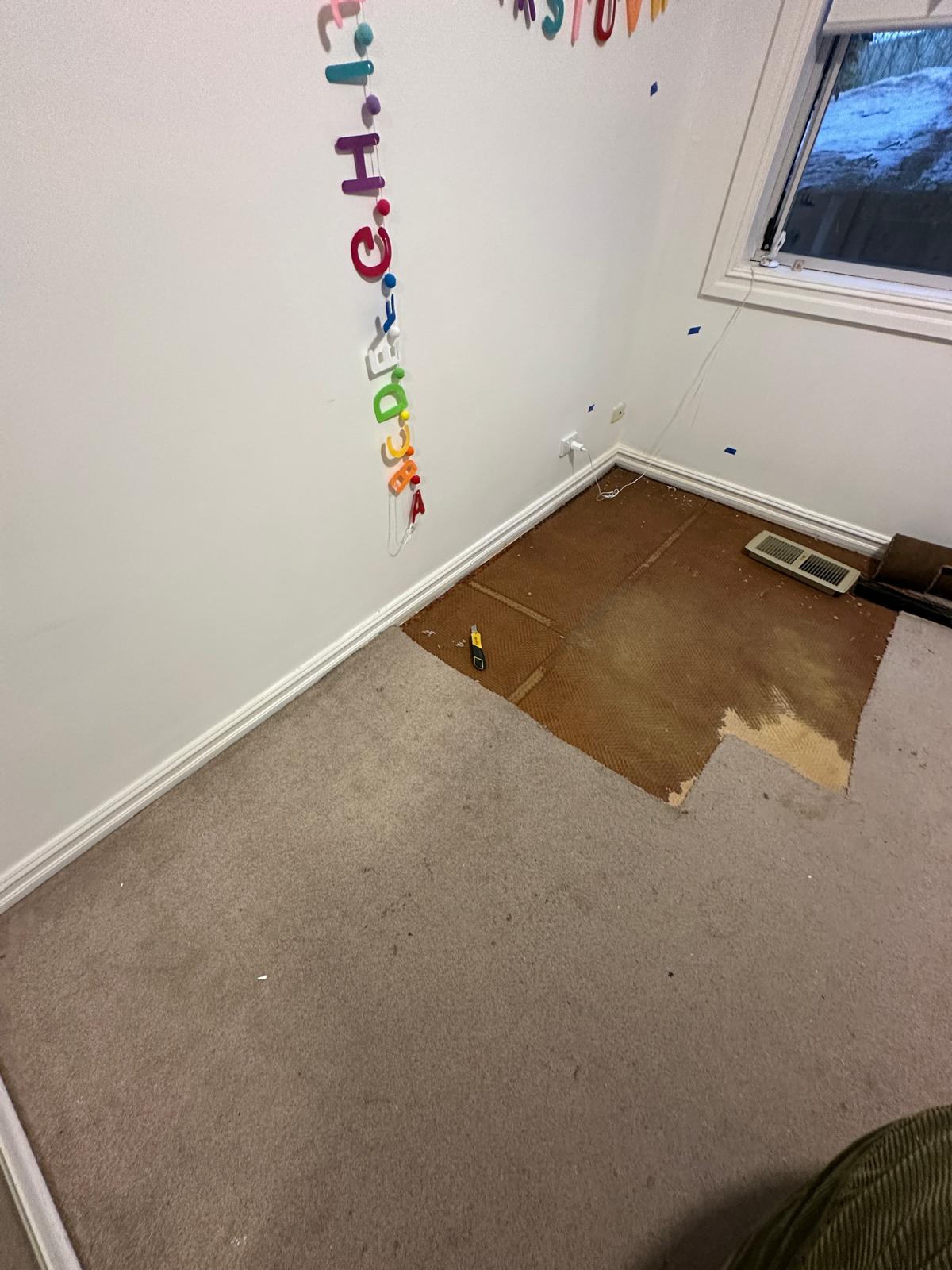
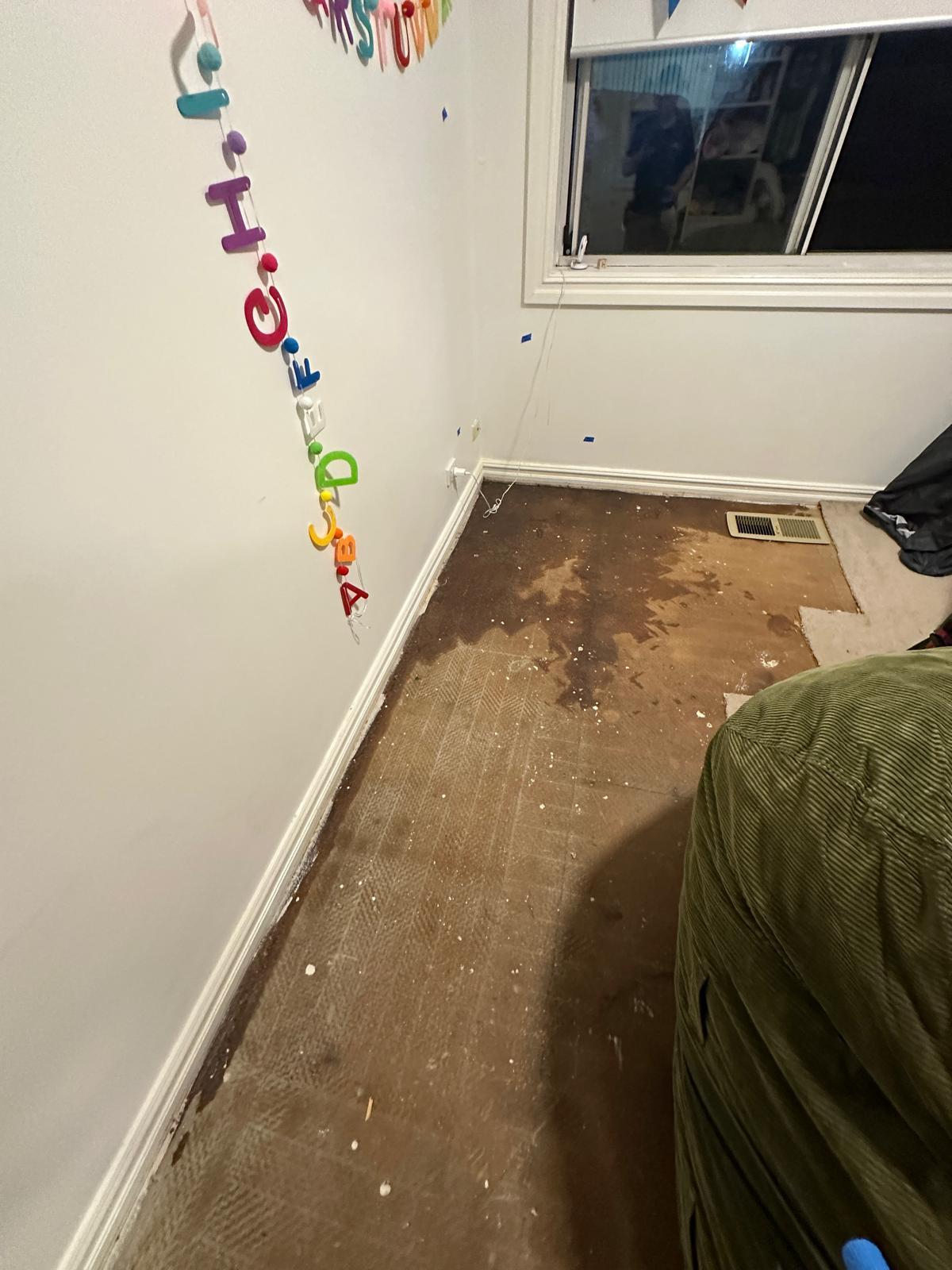
One of the main concerns was the middle bedroom, where the carpet had a noticeable damp odour. Approval was obtained to remove the affected carpet, underlay and smooth edge so the area could be properly accessed and dried.
During further works in an upstairs bedroom adjoining the ensuite, mould was identified on the carpet gripper after the carpet and underlay were removed.
Moisture readings were taken throughout the restoration process to track how the affected materials were responding to drying.
Mould Treatment and Drying Works
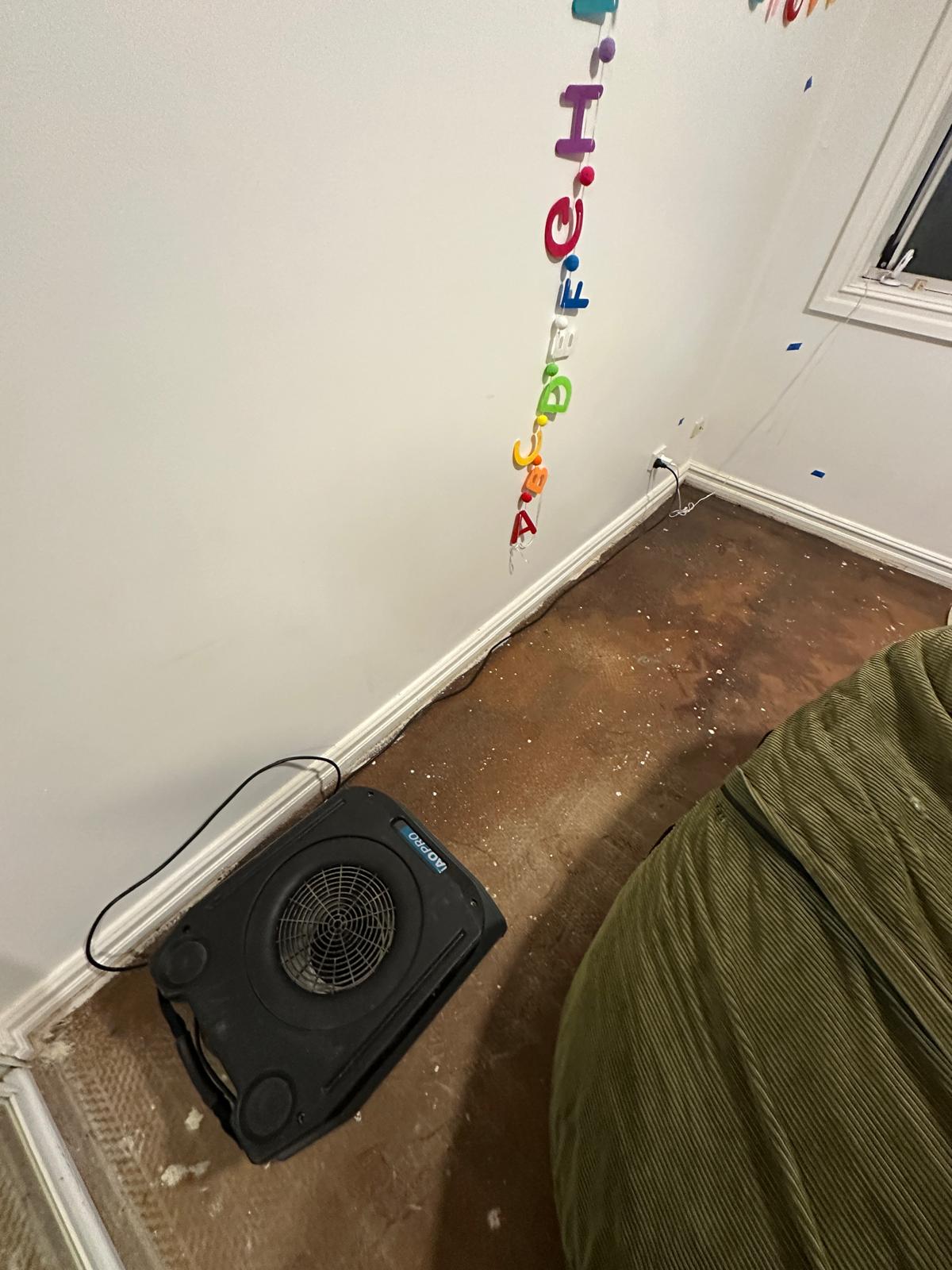
The middle bedroom was treated with Decon 30 to assist with mould contamination and odour reduction. Once the affected carpet, underlay and smooth edge were removed, air movers were positioned throughout the affected levels to begin the drying process.
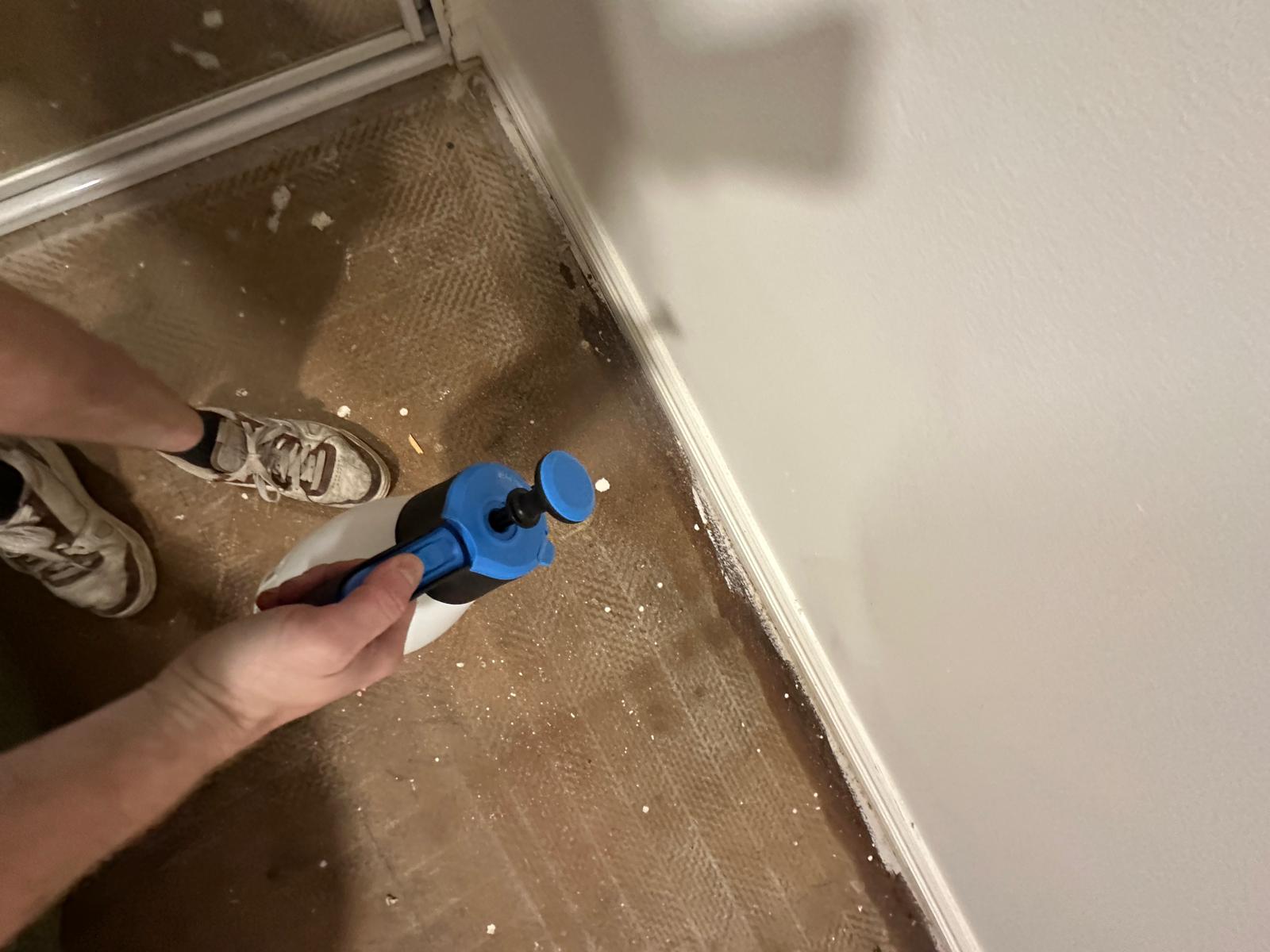
In the upstairs bedroom adjoining the ensuite, the carpet and underlay were also removed following approval. Mould found on the carpet gripper was removed and the affected area was treated with Decon 30.
As drying progressed, equipment was adjusted based on moisture readings. Once the upstairs bedroom walls reached dry conditions, equipment was removed from that section. A dehumidifier was later added to the middle bedroom to support further drying.
Ongoing Moisture Concerns
By the final attendance, the drying equipment was removed and the property was left clean and tidy. However, elevated moisture remained within some skirting boards and cabinetry.
Further invasive investigation was recommended beneath the affected skirting boards and cabinetry to determine whether concealed moisture remained.
One moisture reading within the downstairs living area also remained elevated without significant change during the drying period. As the source of this reading could not be confirmed, further investigation was recommended.
Why This Matters
Water can travel through carpets, walls, cabinetry and adjoining rooms without the full extent of the damage being immediately visible.
When moisture remains trapped inside building materials, it can contribute to mould growth, odours and further deterioration. Moisture testing throughout the drying process helps identify affected areas and shows where additional investigation may still be required.
The Result
High Demand Restoration completed moisture assessment, targeted removal, mould treatment and structural drying works across the affected areas of the Caringbah South property.
Affected carpet and underlay were removed where approved, mould contamination identified on the carpet gripper was addressed, and drying equipment was used and adjusted as conditions improved.
While the drying works improved conditions across the property, some areas continued to show elevated moisture readings. Further investigation was therefore recommended to identify and address any remaining concealed moisture before repair works proceed.