Mould Treatment in Sydney South, Rosebery
Hidden Mould In Wall Cavity After Heavy Rain – Professional Mould Remediation in Rosebery Sydney South
After several weeks of persistent musty odours and recurring mould patches, the homeowner reported water intrusion into their downstairs living room during heavy rainfall about eight weeks ago. Despite repeated cleaning and DIY efforts, the mould continued to return. Following this, the insurer engaged our team to assist the insured with a professional inspection and remediation of the issue.
Incident Overview
During our assessment, we identified cracking skirting boards, elevated moisture readings in the lower wall sections, and visible mould activity. To further investigate, an endoscopic inspection was performed, which revealed significant mould growth inside the wall cavity —confirming the presence of hidden contamination that surface cleaning alone could not fix.

Recommendation
Based on our findings, we recommend removing all Gyprock along the affected wall where water ingress is occurring, to prevent future mould growth and ensure the structure remains dry and safe.
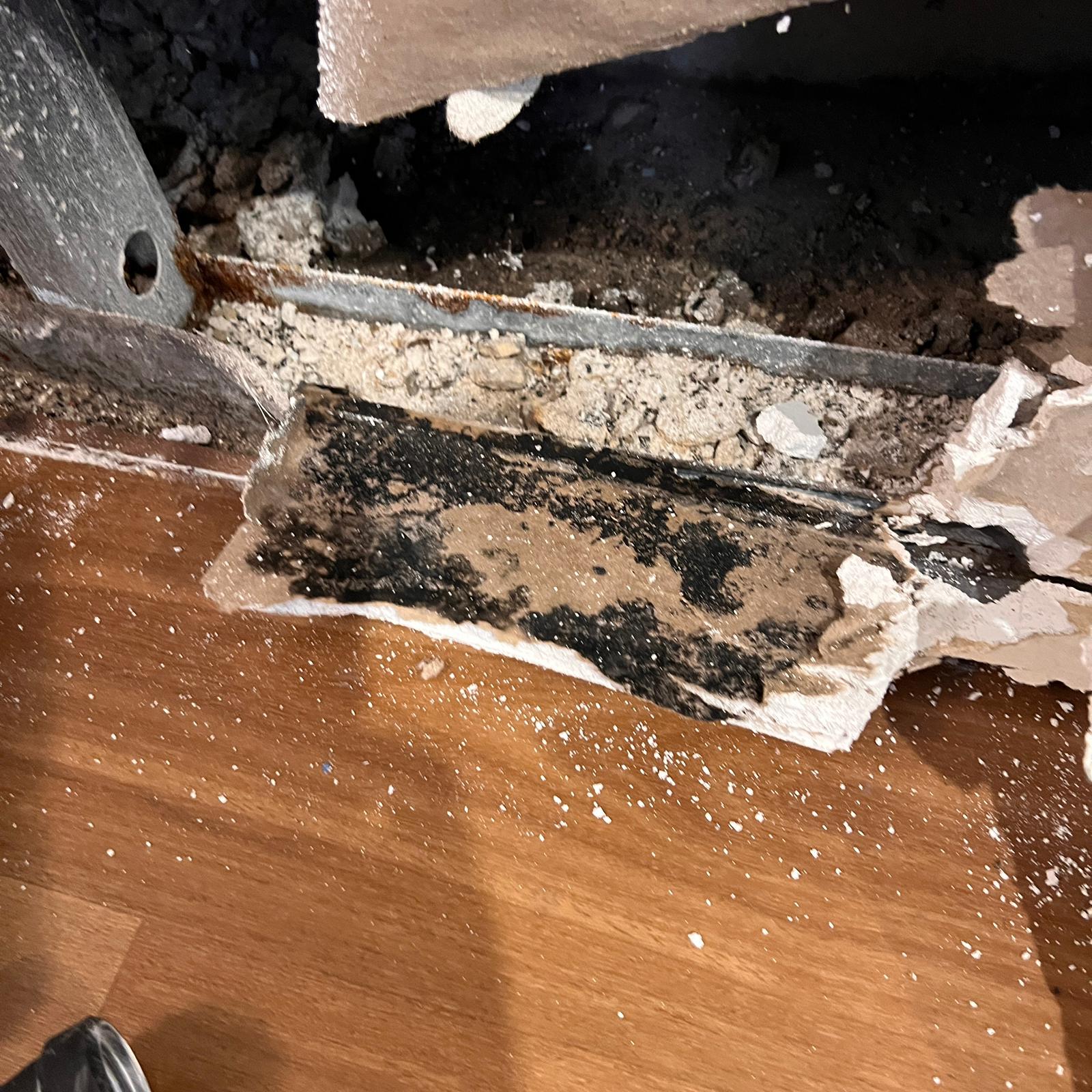
Removing Affected Gyprock to Prevent Mould
Our Remediation Process
Once the insured signed a waiver approving physical removal, we commenced controlled remediation. Our team removed all mould-affected Gyprock while operating an Air Filtration Device (AFD) to maintain safe air quality, continuing removal until only clean and uncontaminated Gyprock remained. We then applied a mould biocide to all exposed structural surfaces, established containment, and used an air mover to support drying within the cavity. An additional mould patch in the garage was also treated, with a fan installed to stabilise elevated moisture levels. All contaminated waste was safely removed and disposed of in accordance with industry guidelines.
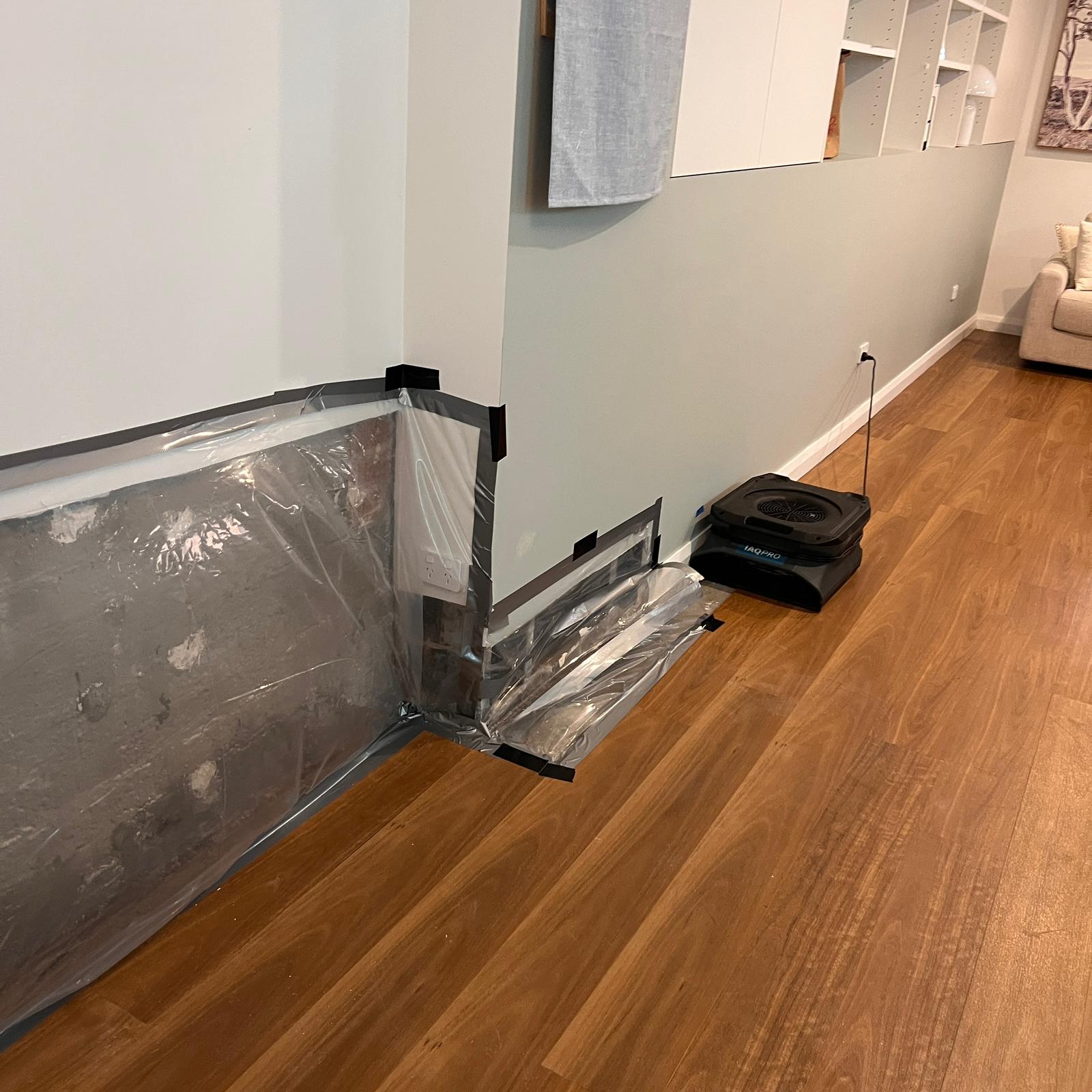
Treatment Process
Why This Matters
Mould often hides deeper within wall cavities long after a leak appears to have dried. In this case, water had been wicking through the joint compound, allowing mould to spread behind the walls. Only invasive inspection and physical source removal could fully address the contamination.
The Result
Following controlled remediation, the affected living room and garage areas were left clean, dry, and free of visible mould contamination. Moisture levels stabilised after targeted drying, and the wall cavity was restored to a safe condition, ready for future reinstatement works. With all contaminated materials removed and the underlying issues identified, the homeowner now has a clear path forward to prevent recurring mould and address the root cause of water intrusion.