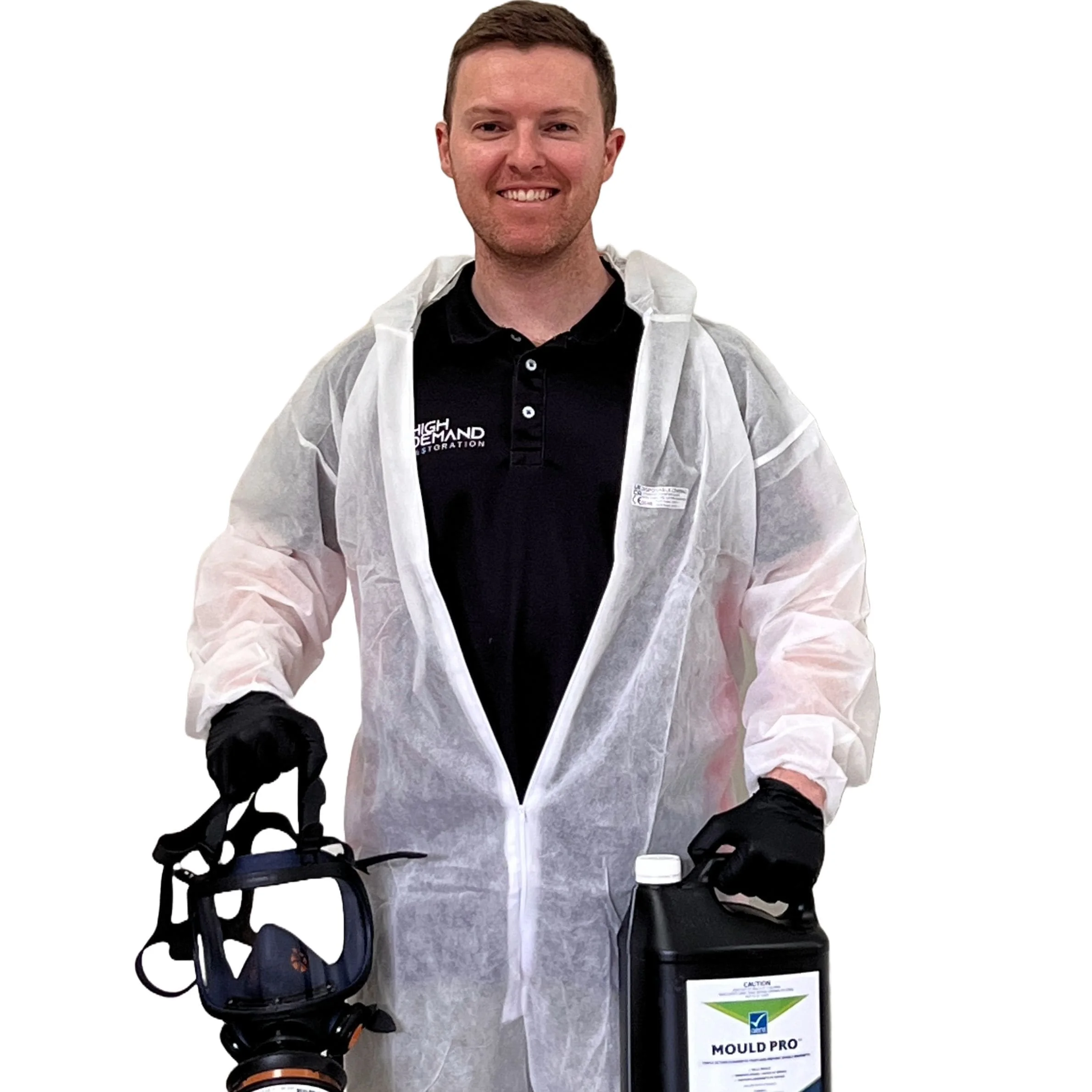
Laundry Ceiling Mould Removal in South Penrith, NSW
Water damage isn't always caused by a sudden flood or burst pipe. Sometimes it's a slow, ongoing leak that keeps coming back, even after repairs. Over time, that repeated moisture can soak into building materials and create the perfect conditions for mould growth.
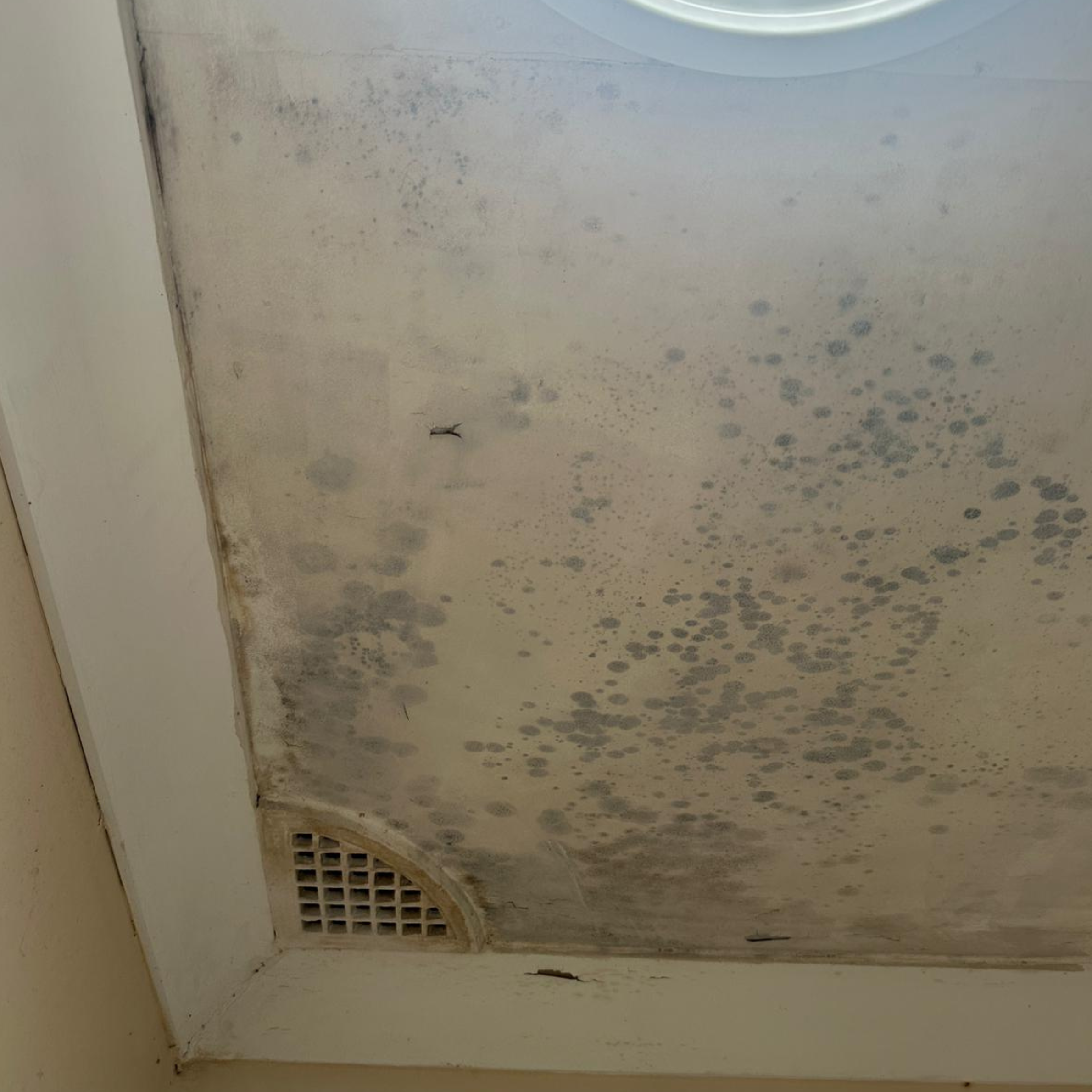
That was the case at a property in South Penrith, NSW, where High Demand Flood & Water Damage Restoration Sydney attended following ongoing water ingress through the roof into the laundry. The laundry ceiling showed extensive water damage along with significant mould contamination.
A Leak That Kept Coming Back
It was reported that the leak may have been present for some time, and that various repairs had been carried out at different times to try to stop it. Despite these works, water ingress was reported to still be present when our team attended.
This is common with roof leaks. Water can travel along rafters, sarking or ceiling joists before it shows up inside, so the visible damage isn't always directly below the entry point. If the true source isn't found, repairs can stop the drip for a while without solving the problem.
Moisture Testing: Finding What the Eye Can't See
A ceiling can look and feel dry on the surface while still holding moisture within the material. That's why moisture testing is one of the first steps in any water damage assessment.
To get an accurate picture, our technician first took a dry standard reading. This is a reading from an unaffected area of the same material, used as a baseline for "normal." In this laundry, the dry standard was 21.2%.
Readings were then taken across the affected ceiling:
One section read 19.3%, within the normal range
Two sections read 46.8% and 50.6%, more than double the dry standard
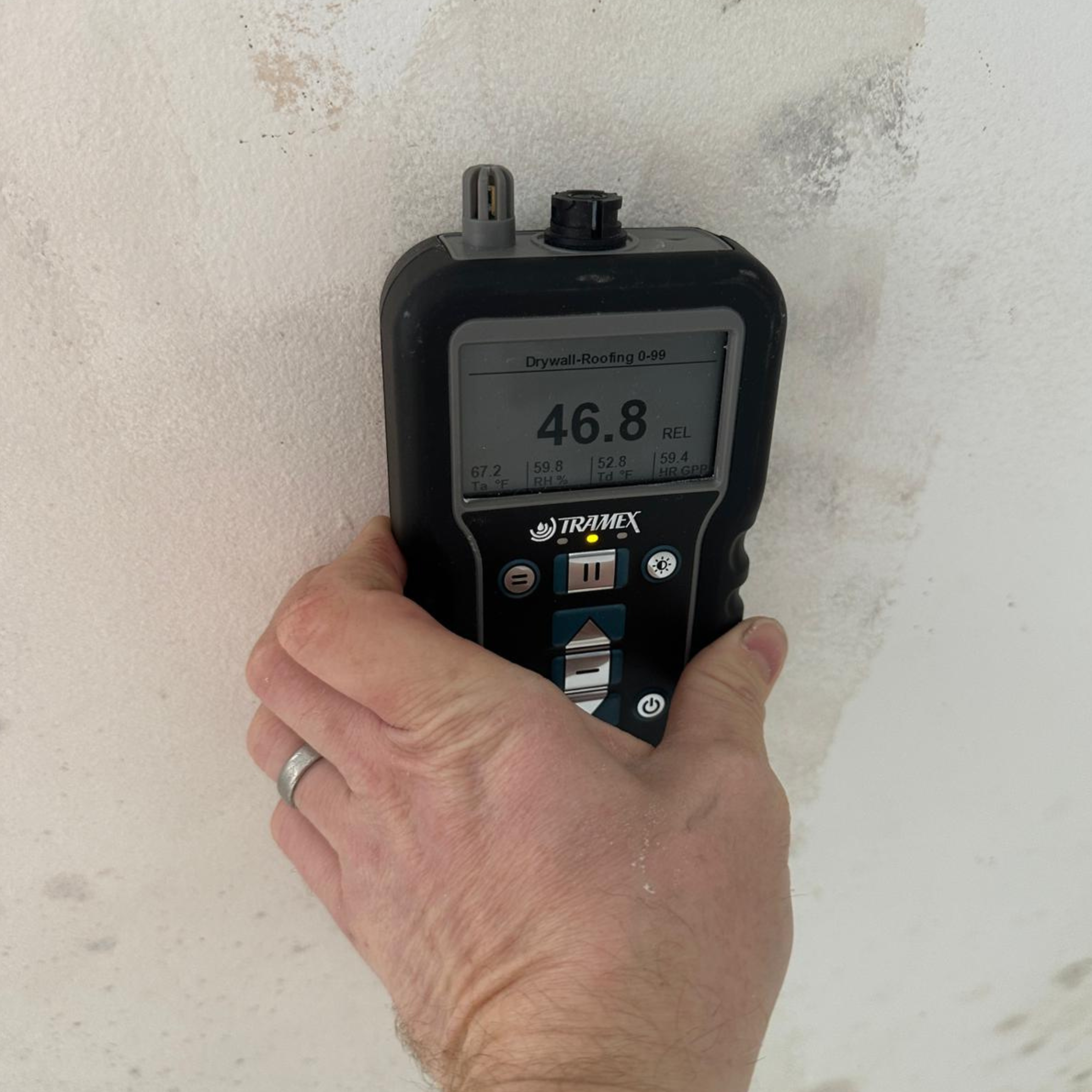
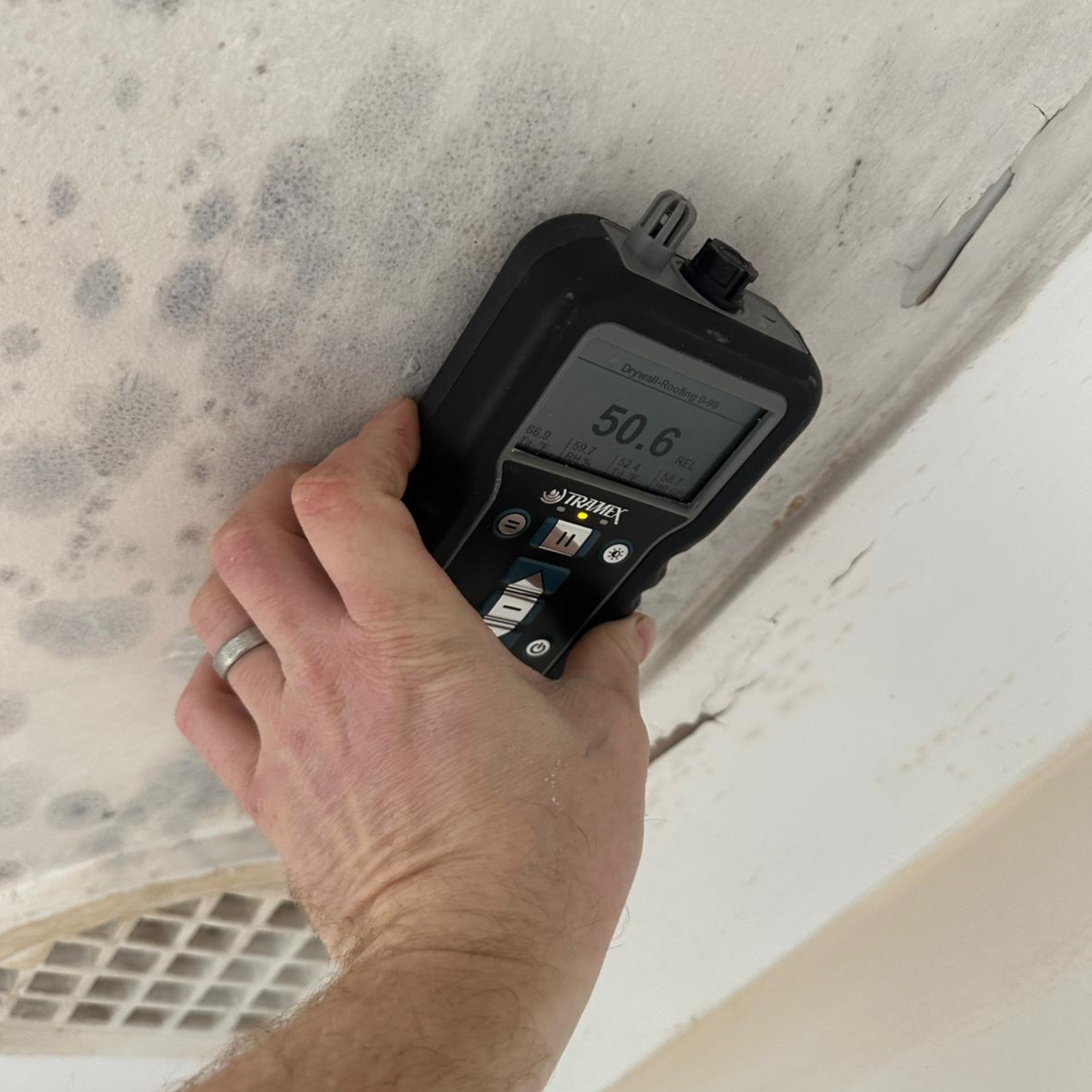
So while much of the ceiling was generally dry at the time of attendance, specific areas were still holding elevated moisture. This is a strong sign that water is still reaching the ceiling, or hasn't had the chance to dry out between leaks.
Why the Mould Couldn't Just Be Cleaned
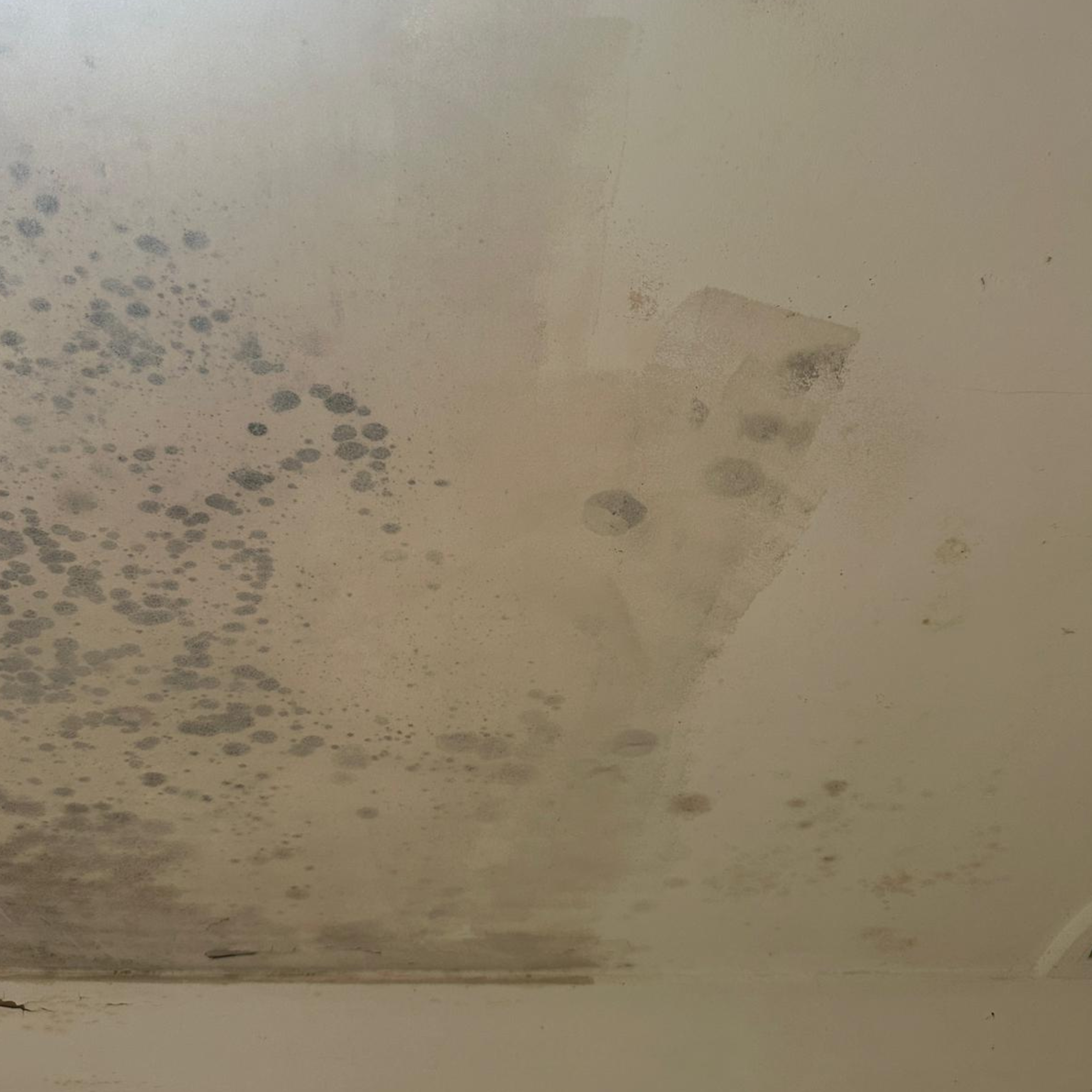
Cleaning of the mould-affected ceiling was attempted during the attendance. However, the contamination could not be adequately removed through surface cleaning alone, as the mould appeared to sit beneath the existing paint coating. The assessment also identified the possibility that the mould had originated on the reverse (roof) side of the plasterboard and grown through the material.
This highlights an important point about mould on plasterboard (gyprock). Plasterboard is a porous material. Once mould takes hold, it can grow into the paper facing and core of the board, not just on the surface. Wiping or spraying can remove what's visible, but the growth within the material remains, and staining often returns.
Under the ANSI/IICRC S520 Standard for Professional Mould Remediation, physically removing mould contamination is the primary means of remediation. Attempts to kill, encapsulate or inhibit mould instead of removing it are generally not considered adequate, and cleaning products should not be used as an alternative to physical removal.
Why Painting Over Mould Doesn't Work
A common DIY response to ceiling mould is to cover it with stain-blocking paint. Unfortunately, paint doesn't remove mould. Any contamination underneath remains in place, and if moisture is still present, it can continue to grow and show through again. Painting over mould can also make the true extent of the problem harder to assess later.
Containing the Affected Area
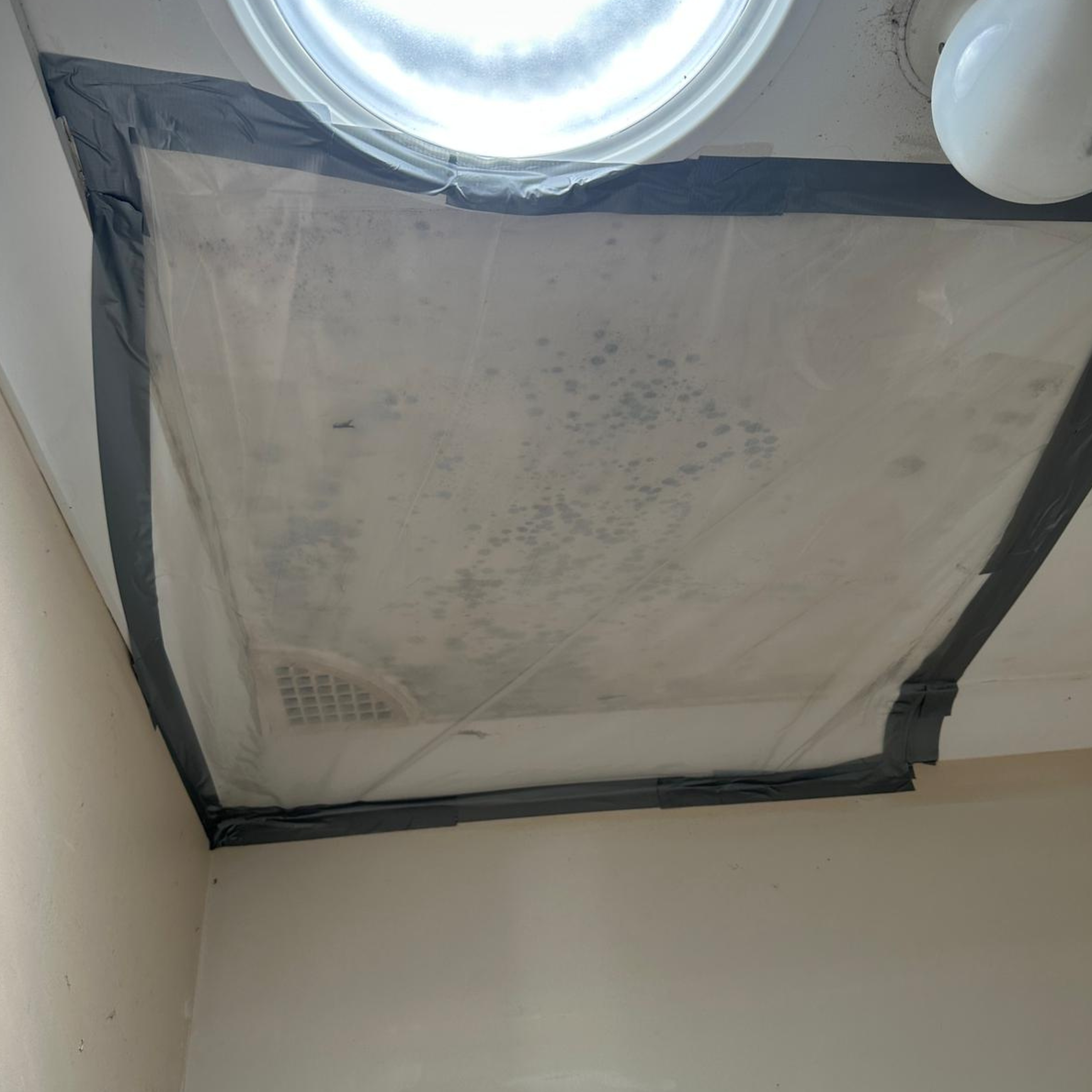
Following the attempted cleaning, temporary containment was established around the mould-affected ceiling. Containment helps isolate the area and reduces the chance of mould-related particles spreading to other parts of the home while further works are arranged.
What We Recommended
Because the mould could not be removed through cleaning, our recommendation for this laundry was the removal and replacement of the affected section of ceiling plasterboard, carried out under containment in line with the IICRC S520 Standard.
Just as importantly, the source of the roof leak needs to be identified and properly repaired before any new ceiling is installed. Replacing the plasterboard without stopping the water would only allow the same damage, and the same mould, to return.
Seeing Mould or Stains on Your Ceiling?
Recurring ceiling stains, bubbling paint or mould that keeps coming back after cleaning are signs that moisture may still be present within the material. Early moisture testing can show what's really happening before the damage spreads.
If you've noticed signs like these in your home, contact High Demand Flood & Water Damage Restoration Sydney for an inspection and moisture assessment.
Dealing with water damage or mould in South Penrith? Our IICRC-certified team is available 24/7. Call (02) 9090 4625 or download our free mould guide.